Origin
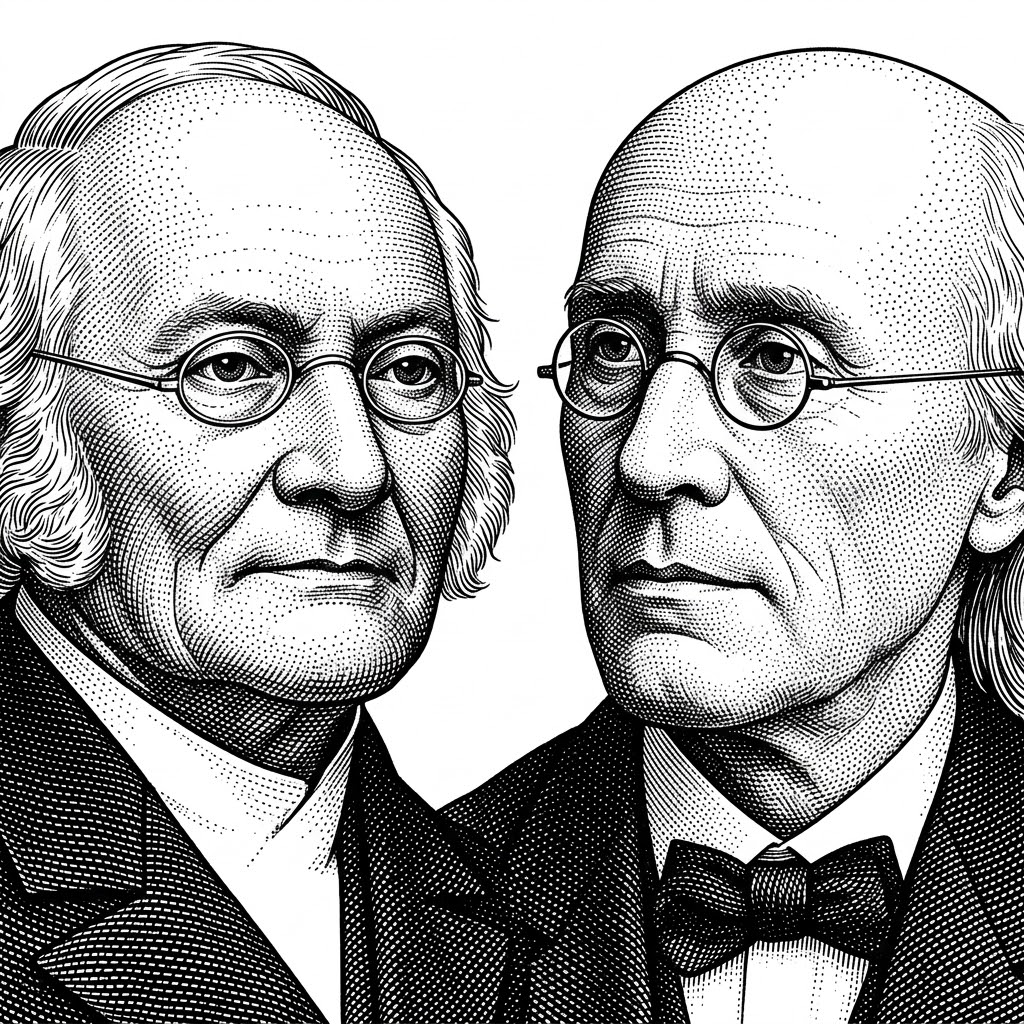
Ernst Heinrich Weber, a German physician, measured in the 1830s how much a stimulus must change before people notice. Gustav Fechner, his student, formalized the relationship as a logarithmic law in 1860 — founding the field of psychophysics.
Weber established the just-noticeable difference through meticulous weight-lifting experiments at Leipzig. Fechner — physicist, philosopher, and occasional satirist under the pen name Dr. Mises — had the insight on the morning of 22 October 1850, a date psychophysicists still celebrate as Fechner Day.
The Law
The just-noticeable difference (JND) in a stimulus is a constant fraction of the stimulus itself. Going from a $10 latte to $11 is noticeable; going from a $1,000 laptop to $1,001 isn’t. The eye, the ear, and the wallet all run on ratios, not absolutes.