Jakob’s Law

Users spend most of their time on other sites.

People spend most of their time on other sites, so they expect yours to work the same way. Follow convention — and watch closely, because AI is rewriting what convention means.

Origin

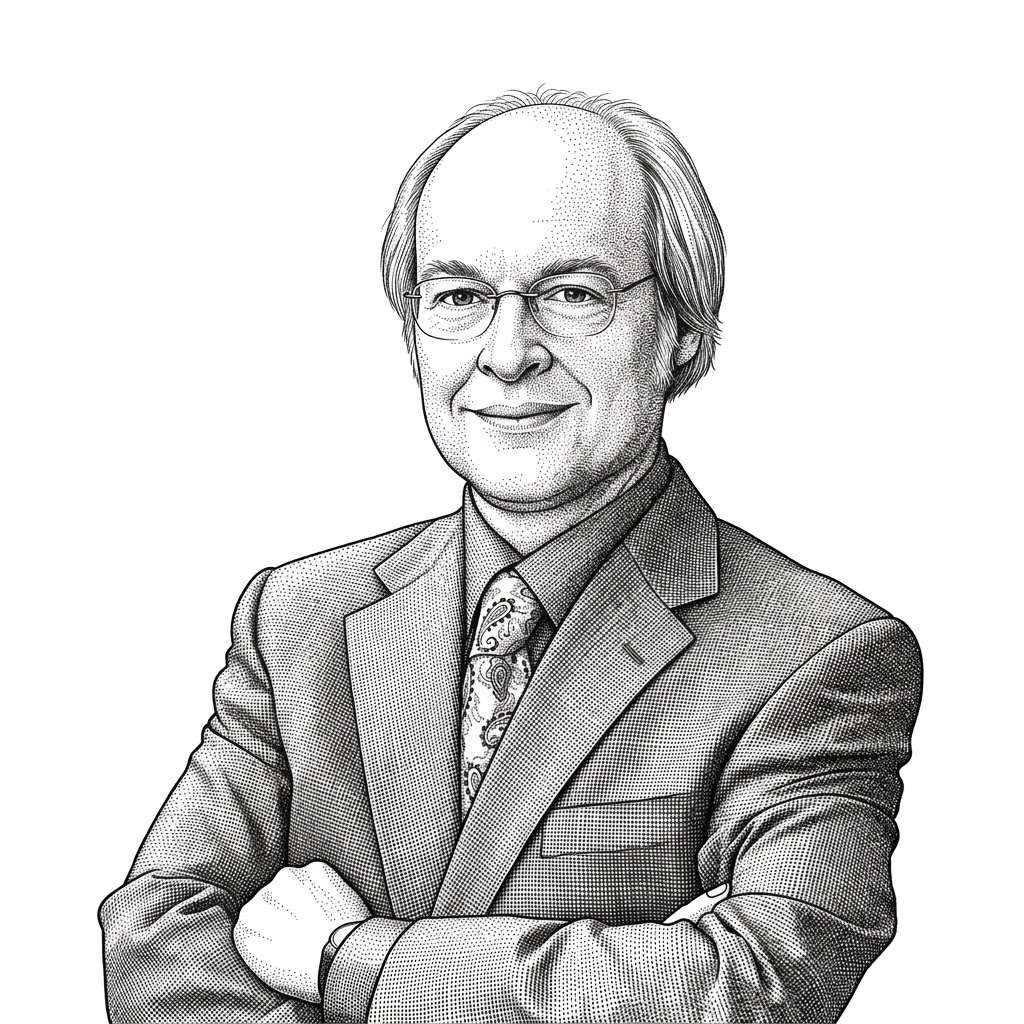
Jakob Nielsen — the same Danish usability engineer behind the ten heuristics — stated his law of the internet user experience in 2000, at the height of every site inventing its own navigation.

The law is an argument from arithmetic: users spend nearly all their time on sites other than yours, so your site is the exception to their habits, not the rule. Familiarity is a feature you get for free by following convention.

The Law

Users spend most of their time on other sites, so they expect yours to work the same way. Break convention only where the payoff clearly outweighs the relearning cost.

Coined by
Source
End of Web Design, Alertbox
In practice
Default to convention; innovate sparingly
The law 01 / 10

The Law

Users form their mental model of how an interface should work from every other interface they’ve used. The closer yours matches that accumulated expectation, the less they have to learn — and the more usable it feels.

Coined by
Core idea
Expectations transfer between products
Implication
Follow established conventions
Mental transfer 02 / 10

Transfer of Expectations

Every product a user has touched leaves a deposit of expectation. They arrive at yours already “knowing” where the cart, the search, and the menu should be — because a hundred other sites put them there.

Source
Every product they’ve used
Deposit
Where things “should” be
Benefit
Zero learning curve
Convention 03 / 10

Conventions Are Powerful

Logo top-left links home. Cart top-right. Primary nav across the top. Underlined blue text is a link. These aren’t laws of nature — they’re conventions so widely shared they may as well be.

Examples
Logo · Cart · Nav · Links
Strength
Near-universal across the web
Cost to break
User has to re-learn
Reuse 04 / 10

Don’t Reinvent Standard Patterns

A “creative” date picker, a novel scrollbar, a bespoke dropdown — these almost always cost more than they’re worth. Familiar controls work because users have thousands of reps with them already.

Reuse
Native controls · known patterns
Test
Does novelty add real value?
Watch for
Innovation theater
Mental model 05 / 10

The Mental Model

Users don’t read your UI fresh — they match it against an internal model built from experience. When your interface matches the model, it feels intuitive. When it conflicts, it feels broken.

Built from
Prior experience
Match
Feels intuitive · invisible
Conflict
Feels broken · frustrating
Exception 06 / 10

When to Break Convention

Convention isn’t a cage. Break it only when the gain clearly outweighs the cost of re-learning — and when your new pattern is so much better that it could become the next convention.

Break when
Gain ≫ re-learning cost
Examples
Pull-to-refresh · swipe gestures
Risk
Confusion · abandonment

Jakob’s Law in the Age of AI

AI is rewriting the conventions users carry with them. The reference point is shifting from “every website” to “every AI tool.”

✦ AI Era 07 / 10

Chat Is the New Convention

ChatGPT trained hundreds of millions of people on a single pattern: a message box at the bottom, streaming responses above, a thumbs up/down. That’s now an expectation users bring to every AI feature.

Set by
ChatGPT · Claude · Copilot
Expectation
Message box · streaming · feedback
Implication
Match the chat idiom users know
✦ AI Era 08 / 10

Natural Language as Default Input

Users increasingly expect to type what they want instead of hunting through menus. The command palette and the AI prompt are converging — “tell me what you need” is becoming the new front door.

Shift
Navigate → describe
Converging
⌘K palette + AI prompt
Watch for
Hiding discoverability entirely
✦ AI Era 09 / 10

Adaptive UI vs. Consistency

AI can generate a different interface for every user — the opposite of Jakob’s Law’s call for sameness. The tension is real: personalization boosts relevance but erodes the shared conventions users rely on.

Upside
Relevance · less clutter
Downside
No shared mental model
Balance
Adapt content, keep the chrome stable
✦ AI Era 10 / 10

The Convention Is Being Rewritten

Jakob’s Law still holds — but the body of “other sites” it points to is changing fast. The safe baseline now includes AI affordances: a prompt box, streaming output, “regenerate,” cited sources, and an undo for anything the model touched.

Still true
Match user expectations
New baseline
Prompt · stream · regenerate · cite
Takeaway
Re-check conventions every cycle
Further Reading