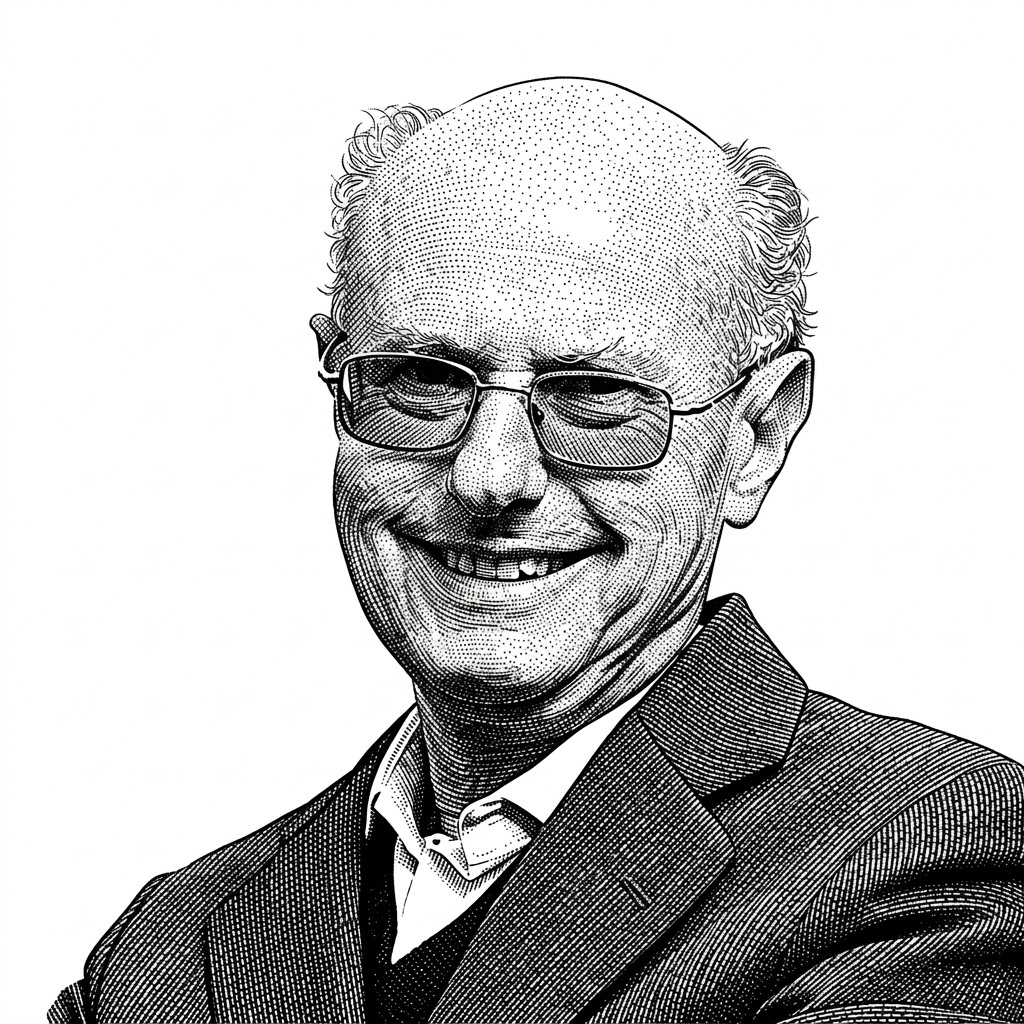
Cognitive Load Theory

Working memory is the bottleneck. Spend it well.

John Sweller’s theory splits mental effort into three loads: intrinsic (the task itself), extraneous (the interface’s overhead), and germane (real learning). Design’s job is to cut the middle one.

Origin

John Sweller, an Australian educational psychologist at the University of New South Wales, developed cognitive load theory in 1988 from studies of how students learn from worked examples versus raw problem solving.

His experiments showed that instruction fails when working memory is spent on the format instead of the content — the split-attention and redundancy effects. The theory became one of the most cited frameworks in instructional design, and maps directly onto interfaces.

The Theory

Working memory is sharply limited. Total load divides into intrinsic (the task’s inherent difficulty), extraneous (effort imposed by presentation), and germane (effort that builds understanding). Reduce extraneous load, manage intrinsic load, and protect what’s left for germane work.

Coined by
Source
Cognitive Science 12 — problem-solving studies
In practice
Cut the interface’s overhead
Three loads 01 / 08

Intrinsic, Extraneous, Germane

Intrinsic load comes with the task — booking a flight involves dates and fares. Extraneous load comes from presentation — hunting for the fare rules. Germane load is the useful effort of understanding. Only one of the three is yours to delete.

Intrinsic
The task itself
Extraneous
Your interface’s overhead
Germane
Learning that sticks
Cut 02 / 08

Delete Extraneous Load

Every decoration, redundant label, competing accent, and split reference costs working memory that the task needed. The cluttered and clean version do the same job; only one leaves room to think.

Delete
Decoration · redundancy
Same job
Less overhead
Freed memory
Goes to the task
Manage 03 / 08

Chunk the Intrinsic

Intrinsic load can’t be deleted, but it can be sequenced. Wizards, sensible defaults, and part-by-part reveals hold the task’s difficulty constant while capping how much of it lands at once.

Can’t delete
Only sequence
Tools
Wizards · defaults
Cap
Load per moment
Split attention 04 / 08

Keep Related Things Together

Sweller’s split-attention effect: when the diagram is here and its explanation is there, integrating them is pure overhead. Put labels on the thing, errors at the field, and help where the question arises.

Label
On the thing
Error
At the field
Help
Where the question is
Germane 05 / 08

Worked Examples Teach

Novices learn more from a completed example than from solving cold — germane load in action. Templates, sample data, and pre-filled starting points are the interface version of the worked example.

Novices
Learn from examples
Interface form
Templates · sample data
Blank slates
Are expensive
Signals 06 / 08

Recognizing Overload

Overload has signatures: re-reading the same line, abandoning mid-form, wrong defaults accepted, support tickets that quote the interface back to you. When users think about the tool instead of the task, load is misallocated.

Signatures
Re-reads · abandons
Tell
Thinking about the tool
Measure
Task success · time

Cognitive Load in the Age of AI

Assistants absorb enormous extraneous load — and mint a new kind: the effort of verifying what the machine claims.

In the Age of AI 07 / 08

The Great Load Absorber

An assistant that reads the docs, fills the form, and reconciles the formats is deleting extraneous load at industrial scale. The task’s intrinsic difficulty remains — but the overhead around it collapses.

Deletes
The overhead
Remains
The real decision
In the Age of AI 08 / 08

Verification Is the New Load

What AI removes in mechanics it partially returns in checking: is the summary faithful, the number right, the citation real? Design for cheap verification — sources inline, diffs visible — or the load returns as anxiety.

New load
Checking the machine
Make it cheap
Sources · diffs inline
Further Reading