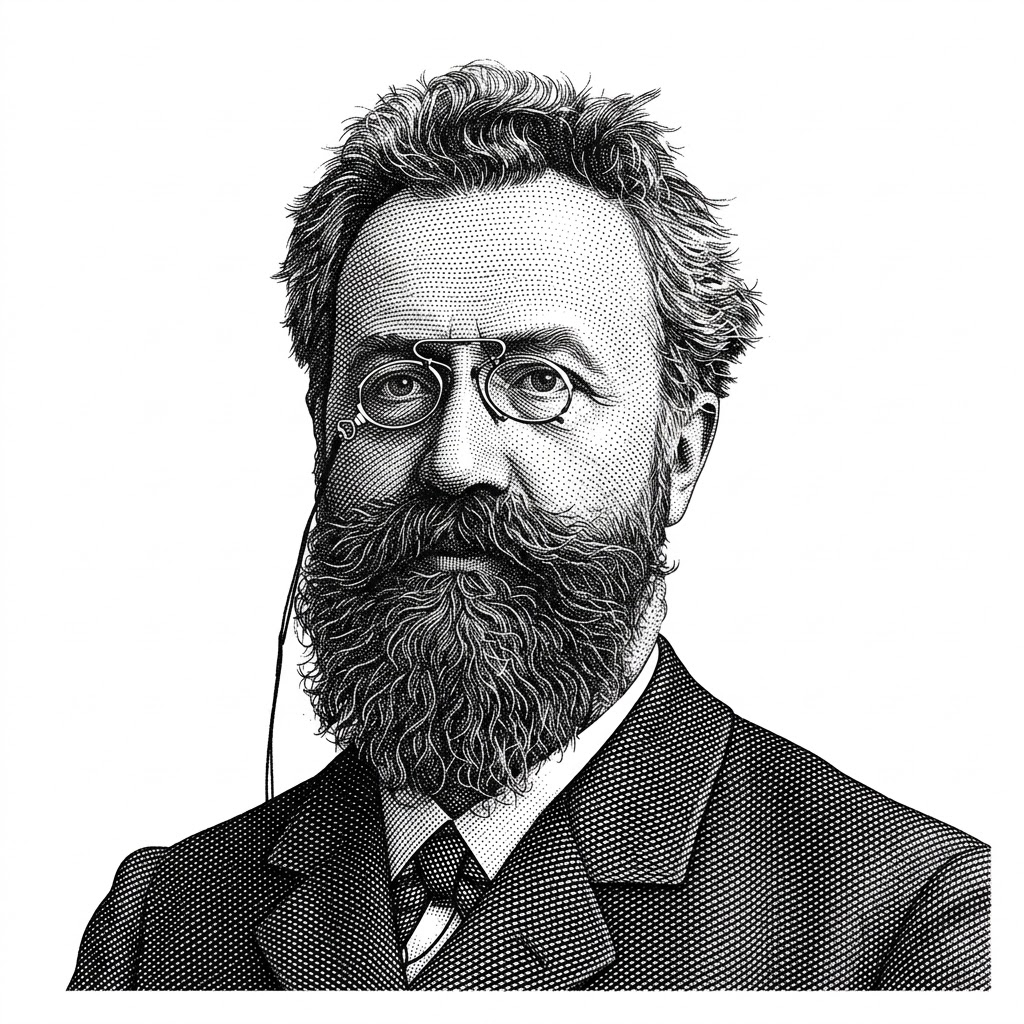
Serial Position Effect

First and last stick. The middle fades.

Hermann Ebbinghaus found that people best recall the first and last items in a series — primacy and recency — while the middle blurs. The effect decides what goes at the ends of your menus, lists, and flows.

Origin

Hermann Ebbinghaus, the German psychologist who founded the experimental study of memory, documented the serial position effect in the 1880s — memorizing thousands of nonsense syllables on himself and plotting where recall failed.

His curves showed recall highest at the start of a list (primacy — items get rehearsed into long-term memory) and at the end (recency — items still sit in working memory), with a sag in the middle. The same experiments produced the forgetting curve and the spacing effect.

The Effect

When people recall a series, performance forms a U: the first items benefit from rehearsal into long-term memory, the last from still being in working memory, and the middle items lose both advantages. In interfaces, position is a memory decision.

Coined by
Source
Memory: A Contribution to Experimental Psychology
In practice
Ends carry the weight
Primacy 01 / 08

First Impressions Get Rehearsed

The first items in any sequence get the most attention and the most rehearsal — users return to them mentally while processing the rest. The first menu item, first onboarding screen, and first bullet do disproportionate work.

Position
First
Mechanism
Rehearsal into memory
Use for
Core action · key claim
Recency 02 / 08

The Last Thing Lingers

The final items sit fresh in working memory when the sequence ends. The last screen of a flow, the closing line of a dialog, and the bottom action in a sheet are recalled almost as well as the first.

Position
Last
Mechanism
Working memory
Use for
Confirmation · next step
The curve 03 / 08

The U-Shaped Recall Curve

Plot recall against position and the shape is a U — high at both ends, sagging in the middle. Anything that must be remembered from the middle of a sequence needs extra help: emphasis, repetition, or relocation.

Shape
High ends, low middle
Primacy
Long-term memory
Recency
Working memory
Navigation 04 / 08

Anchor the Ends of the Nav

Put the most important destinations first and last in menus and tab bars — Home at one end, the profile or cart at the other. The middle is where secondary destinations live comfortably.

First slot
Primary destination
Last slot
Second anchor
Middle
Secondary items
The middle 05 / 08

Put the Middle to Work

The sag isn’t wasted space — it’s where low-stakes items belong. Settings sub-pages, edge-case options, and legal links can live mid-list without cost, freeing the ends for what must be found and remembered.

Middle is for
Low-stakes items
Ends are for
Findable · memorable
Watch for
Burying essentials
Flows 06 / 08

Sequence Steps Like a Story

In onboarding and checkout, users remember how it started and how it ended. Lead with the value, end with the win — and keep the tedious parts (forms, permissions) in the middle where they blur.

Open with
The value
Close with
The win
Bury
The paperwork

Serial Position in the Age of AI

Models have their own middle problem — long contexts recall their start and end best. The old memory curve found a new machine.

In the Age of AI 07 / 08

Prompts Have Ends Too

Instructions at the start and end of a long prompt are followed more reliably than ones buried in the middle. The same primacy-recency shape that governs human lists governs what a model attends to.

Pattern
Key rules first and last
Middle
Context, not commands
In the Age of AI 08 / 08

Lost in the Middle

Long-context models recall the start and end of their context best — retrieval quality sags for material in between. Feed a model a hundred documents and the middle ones need the most deliberate surfacing.

Known as
Lost-in-the-middle
Counter
Rerank · cite · chunk
Further Reading